
EQUITIES COMMENT – “STRONG MARKET RETURNS OVERSHADOW INEQUALITY”

Strong market returns characterized the first half of 2026. The S&P/TSX Composite returned 7%, the S&P 500 14.5% in Canadian dollars (CAD), and the MSCI World Index was ahead 15.8% in CAD (all including dividends). The size of these increases is in line with or well above the long-term average gain for an entire year, not just a quarter.
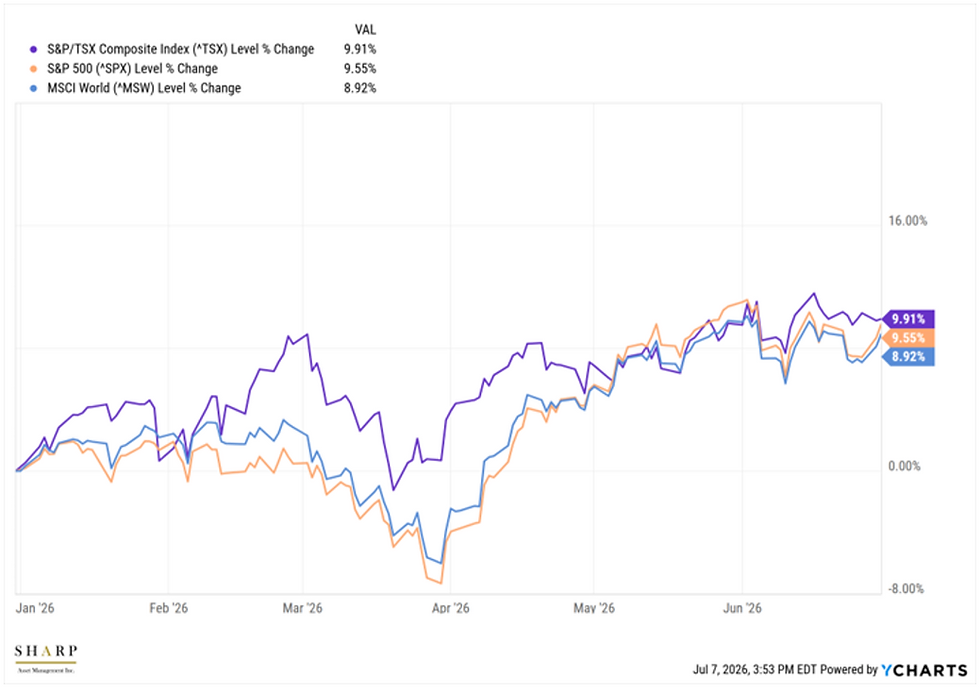
Signs of a resolution to the U.S/Israel/Iran war and the resulting fall in oil were one of the positive developments. Lower oil prices mean reduced inflation and less risk of interest rate hikes by central banks. Continued huge investment in Artificial Intelligence (AI) data centres and extremely strong demand for chips boosted Semiconductor stocks along with other AI beneficiaries.
When we look at the sector returns for the first six months of the year, we start to see some "inequality".

The difference in returns for Technology south and north of the border is striking. The U.S. Technology sector (up 19%) contains many stocks benefiting from the expansion of AI. This includes companies that manufacture semiconductors, while in Canada, our Technology sector (down 18%) is comprised mainly of Software and IT Consulting stocks. These stocks have declined due to worries that AI will cannibalize their businesses and put downward pressure on margins.

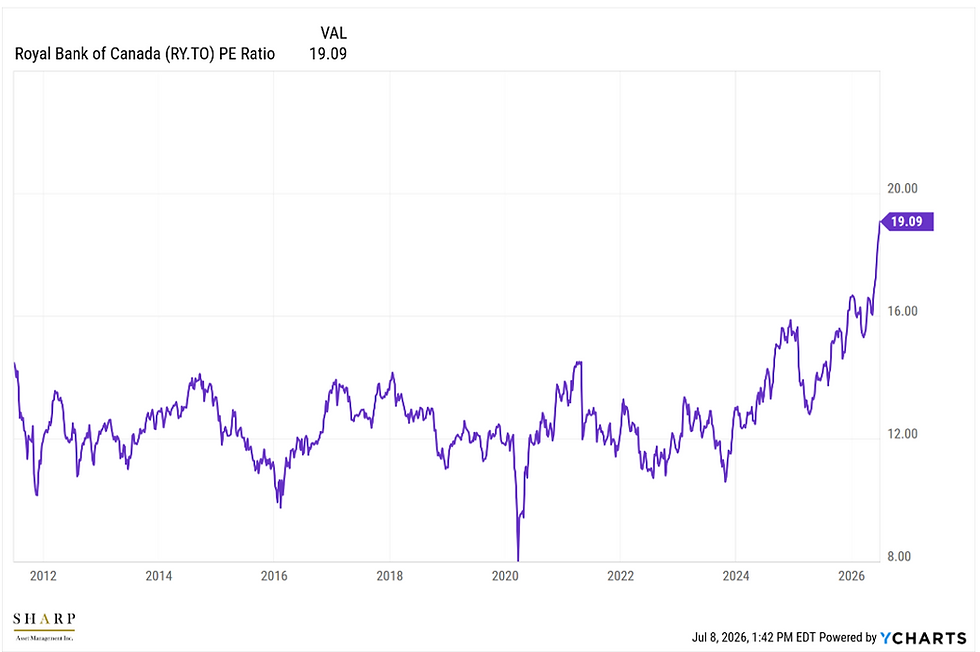
Energy delivered similar returns in both during the first half (about 20%). Even though oil prices have declined recently, prices are still significantly above where they started the year. Among Canadian sectors, Financials had the second-best performance (21%). Banks were the star with a gain of 30% in the first half. Strong capital markets revenues, increased fees from wealth management, an uptick in loan volumes, stable bad loans and good expense control contributed to an annual increase in earnings of 26%. In addition to stellar profit growth, bank stock p/e multiples increased to levels not seen in the last 15 years.

The story for U.S. Financials is quite different, with the Banks only up 4% this year. U.S. Financials have been held back by a number of issues, including concerns about private credit, increased competition for deposits and rising expenses.
The remainder of the top three performing sectors were Utilities in Canada and Industrials in the U.S. Both are benefiting from the growth of AI data centres. The demand for power will increase, and this aids the Utilities. Industrials have benefited from increased shipping associated with construction activities as well as higher production of electrical equipment, machinery and building products.
Besides Canadian Technology and U.S. Financials, other underperforming sectors included Consumer Discretionary and Communications. Less affluent consumers have been squeezed by higher energy prices, and this has had a knock-on effect for retailers here and in the U.S. The Communications stocks in Canada continue to deal with a negative regulatory environment and a declining population.
Turning to the TSX Composite and S&P 500 as a whole, forecasters are expecting double-digit earnings growth to carry on through to 2028. A combination of higher commodity prices and booming AI is expected to support this unusually positive outlook. Should earnings meet expectations, returns of approximately 10%-15%, including dividends, are possible for the TSX and S&P 500 over the next year.
What risks do we see for our forecast?
Economic growth disappoints - If oil remains higher for longer, growth for the global economy is likely to be reduced. Canada is also dealing with a more negative trade environment that could get worse. The USMCA has not been extended and will be subject to annual reviews and negotiations. Poor productivity (tied to low investment) and a shrinking population are also weighing on the Canadian economy.
Bond yields rise due to inflation worries – The increase in the oil price is putting upward pressure on inflation. For now, central bankers are on hold, thinking that there will be an end to the war in the not too distant future. However, if oil prices remain at current levels or increase further, we could see rate increases in the U.S. and Europe.
Commodity prices weaken – Gold was down 7% during the first half of 2026 mainly due to strength in the U.S. dollar. If gold remains at these levels, earnings for the TSX could be revised down. Oil below $75 would also put the TSX earnings forecast in jeopardy.
Developments in the field of AI disappoint investors – There are concerns about AI and how it will affect profitability for the Tech sector, particularly for software companies and firms that are making very large capital investments. If it were to slow below the levels currently anticipated, this could negatively impact not just the semiconductor stocks but other beneficiaries of AI such as industrials and utilities.
At this time, we are not making any changes to our year-end forecast for the TSX (35,500) or the S&P 500 (7,800). Sectors with the strongest returns so far this year (Banks, commodity (energy and mining), industrials and semiconductors) are considered cyclical, which means their earnings and revenues tend to fluctuate significantly during an economic cycle.
Continued uncertainty in the Middle East has raised the risk of disappointing economic growth, increased inflation and higher bond yields due to the rise in the price of oil. Should commodity prices weaken and/or the AI expansion slow, we would expect stocks to react negatively.


Comments